The Legend of Ghost Hill — as told by Siyaka
IHHB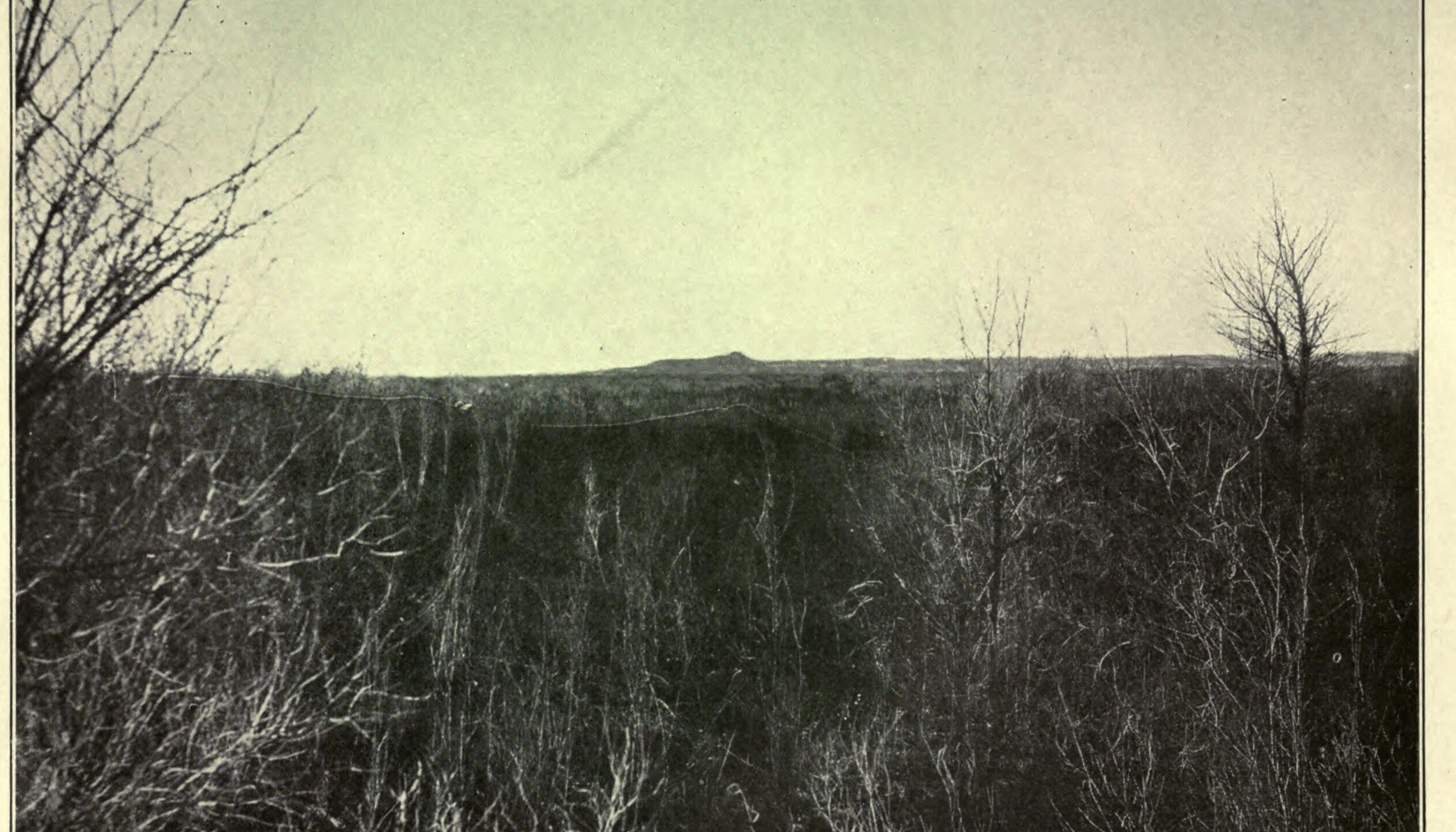
About eight miles southeast of Fort Yates, on the Standing Rock Reservation, rises a high butte the people call Ghost Hill. This legend about it was told by Siyáka (Teal Duck) of Standing Rock, and recorded around 1913. The ghost's song was sung for the recording by Two Shields, who would only consent to record it in exchange for a pipe of red pipestone. When Sitting Bull and his band were brought from Canada they camped one winter on the lowland beside the Missouri River, a few miles below Fort Yates. It was a large camp, including many Indians who were afterward located at Pine Ridge and at Cherry Creek in the Cheyenne River Reservation. Among these people was a particularly handsome young man, who was very fascinating to the young women. One day he disappeared. As no trace of him could be found, his parents consulted a man who had sacred stones, giving him a horse and asking that he would tell them of their son. This man said that during the next night the voice of the missing man would be heard passing through the camp, and that all must follow the voice. On the night designated all the camp was on the alert. Just before dawn they heard the voice of the young man approaching. His parents and friends, recognizing the voice, began to lament, and the dogs barked as at the approach of a person. The voice passed through the camp, singing a love song, then turned and came back, retracing its way toward this hill. The people followed, but could not go as fast as the voice, which gradually became more distant until it was lost in the darkness. The young man's parents went again to the owner of the stones, gave him another horse, and asked who had killed their son. The man said he had been murdered by ten men who were jealous of him — and that one of these men would die in ten days, another in ten days after the first, and so on until all were dead. This came to pass as he predicted. The parents begged to know where they could find the body of their son. The man told them to follow the voice, which was still heard at intervals singing the same song, until they reached the place where it disappeared. The next time they heard the voice they hastened toward it and saw at some distance before them a figure wrapped in a gray Army blanket. They followed it but never could quite overtake it. Sometimes they would feel its presence behind them, and on looking back, would see it — but it never quite overtook them. It always followed the path toward Ghost Hill, and the parents thought it disappeared into the side of the hill. They dug into the side of the hill and made diligent search, but the body of the young man was never found. A man named Walking Elk lived at the foot of Ghost Hill. He had a large family, the members of which died one after another. He laid their deaths to the ghost and shot at it with his rifle. The last appearance of the ghost was about the year 1889. It is said that a similar figure wrapped in a gray Army blanket was later seen at Pine Ridge and on the Rosebud Reservation. The ghost's song, as sung by Two Shields: Finally I weep — weeping I roam — I was the most enthusiastic of all the young men courting — weeping I roam. ——— CREDITS & SOURCE Told by: Siyáka (Teal Duck), Standing Rock Lakota — recorded c. 1913. Ghost's song recorded by Two Shields. Published in: Frances Densmore, "Teton Sioux Music," Bureau of American Ethnology Bulletin 61 (Washington: Smithsonian Institution, 1918), pp. 496–497. Public domain (U.S. government publication, pre-1930). Read the original: https://archive.org/details/no61bulletinethn00smituoft Photo: Ghost Hill, Plate 81 of the same volume. Shared here in honor of the teller. If this story belongs to your family or community and you would like it presented differently, please reach out.