The Ghost Dance at Rosebud — remembered by Luther Standing Bear
IHHB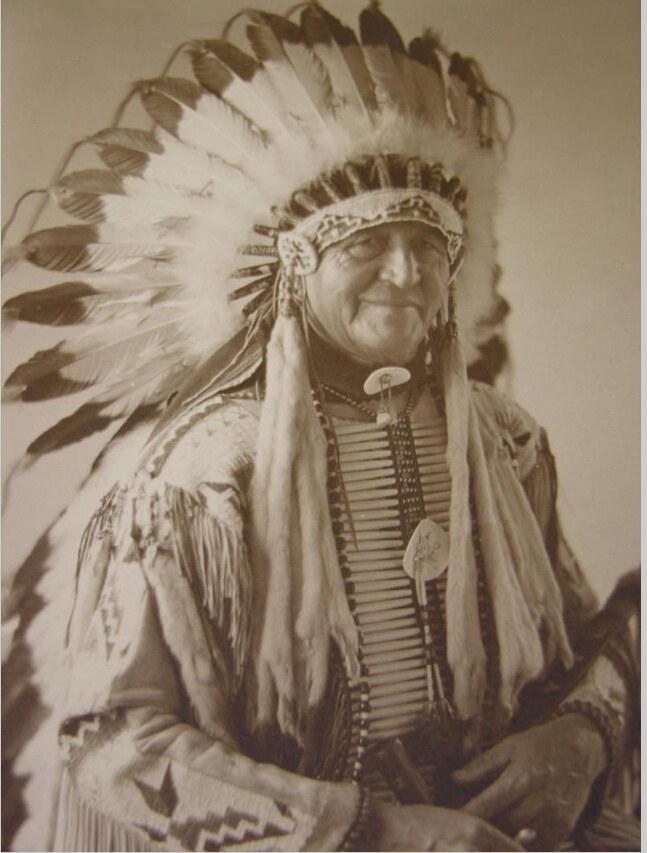
In the winter of 1890, the Ghost Dance movement swept the Lakota reservations — a prayer, born of hunger and loss, that the old world might return. Luther Standing Bear was a young man at the Rosebud Agency that winter, and in his 1928 book "My People the Sioux" he wrote down what he saw with his own eyes. These are his words, lightly condensed: And then suddenly great excitement came into our midst. It broke so suddenly over us that a great many of the Indians did not know which way to turn. It was the craze of a new religion called the "Ghost Dance." This was in 1890. One day I was called into the agent's office. There I saw an Indian called Short Bull. The agent asked him to tell about the new religion which they were all getting so excited about, and why he believed in it. Said Short Bull: "We heard there was a wonderful man in the Far West. He was a Messiah, so several tribes gathered together to go and see him. We went to the place where the sun sets, and there we saw this man. He told us we were to have a new earth; that the old earth would be covered up, and while it was being covered we were to keep dancing so that we could remain on top of the dirt. He showed us visions of the olden times when the buffalo were plenty; when the big camps were on the plains. All our people were dancing and having a big feast." The first thing we knew, the majority of the Rosebud Indians had joined the ghost dancers. We could see the dust flying skyward from the dancing, and hear the beat of the tom-toms. They would keep up the dancing until they fell from exhaustion. The ghost dance was being held about eight miles west of the agency on a flat, on the west side of Little White River. The Indians were really serious about it, and had full faith in what they were doing. They felt that this new religion was going to rid them of the hated pale-faces who had antagonized them so long. Then George Wright, the agent, sent for me to see if I would go to my father's band with a message from him. This band was located about five miles west of the agency, only about three miles from the dancers across the river. I agreed to go. When the wagon stopped, the Indians came out and stood around to listen to what I had to say. I told my people that I wanted to help them, and that was the reason I had come. I said it would not be right for them to join the ghost dancers, as the Government was going to stop it, and it would not be best for them to be found there. I told them if they felt afraid they could move their tipis in and put them up around my house and camp there. They all agreed to come the following morning. Just after I left the camp my plans were all knocked into a cocked hat. One of my uncles, Hard Heart, entered the camp from Pine Ridge. He told them a new world was coming to roll on top of the present one, and that they must either join the ghost dancers or perish. And some one came into the camp that night and told them the soldiers were coming. That frightened them to such an extent that they were all packed up and gone long before daylight. The Indians who had decided to remain at the agency held a council at the Spotted Tail house. When I arrived, my brother-in-law, Chief Hollow Horn Bear, was speaking. He was not a believer in the ghost dance, and was talking very strongly against it. Within weeks, the fear on all sides ended in tragedy: Sitting Bull was killed at Standing Rock on December 15, 1890, and on December 29 the Seventh Cavalry massacred Spotted Elk's band — hundreds of Lakota men, women, and children — at Wounded Knee Creek on the Pine Ridge Reservation. Standing Bear devoted the rest of his life to telling his people's story so that it would not be forgotten. ——— CREDITS & SOURCE Written and told by: Chief Luther Standing Bear (Óta Kté / "Plenty Kill"), Sicangu and Oglala Lakota (1868–1939), an eyewitness to these events at Rosebud. From: "My People the Sioux" (Boston: Houghton Mifflin, 1928), chapter 17, "The Ghost Dance Troubles." Public domain in the United States (published before 1930). Read the original: https://archive.org/details/my-people-the-sioux Photo: Chief Luther Standing Bear in later life (public domain, via Wikimedia Commons). Shared here in honor of the teller and in memory of those lost at Wounded Knee. If this story belongs to your family or community and you would like it presented differently, please reach out.