The Boy at Blue Water — Hollow Horn Bear's Childhood Capture (1855)
IHHB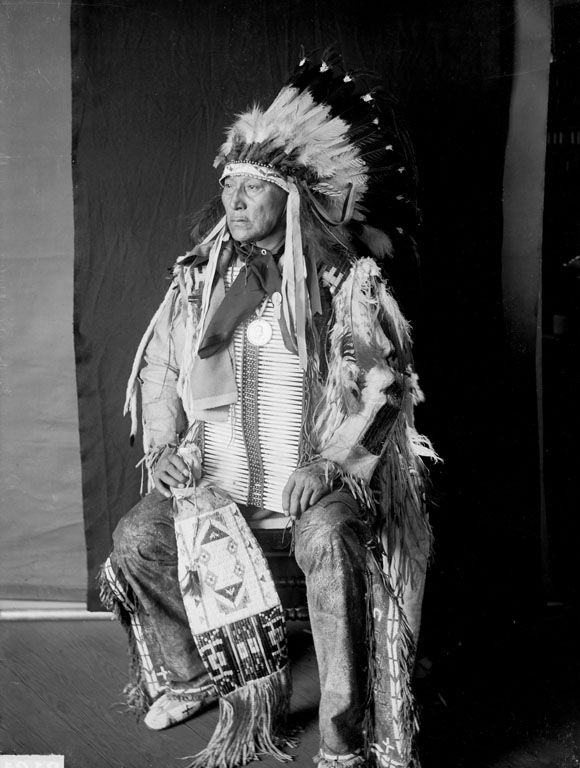
Matȟó Héȟloǧeča — Hollow Horn Bear — was born in March 1850 in what is now Sheridan County, Nebraska, one of seven sons of the Sicangu chief Iron Shell. His mother was Wants Everything (Wisica Wacin Win). He was named for his grandfather. He was five years old on September 3, 1855, when General William S. Harney's soldiers attacked Little Thunder's Sicangu camp on Blue Water Creek, just north of Ash Hollow on the Oregon Trail. The attack — retaliation for the Grattan fight the year before — killed dozens of Sicangu people, many of them women and children, and the soldiers took scores of captives. Among the captives were the boy Hollow Horn Bear and his mother. They were marched to Fort Laramie and held there as prisoners until October 1855, when they were released back to their people. A child who survives such a thing does not forget it. Hollow Horn Bear grew up in the years when the Lakota still rode free between the Platte and the Yellowstone — and in the years when that freedom had to be fought for. By his own count he would take part in thirty-one battles, the first when he was about twelve years old. At sixteen he fought the Pawnee near present-day Genoa, Nebraska. The boy taken at Blue Water became one of the Sicangu's most respected warriors — and, in time, one of their greatest orators and negotiators. This is the first story in a series following Chief Hollow Horn Bear's life across the map — from Blue Water Creek to the Little Bighorn to Washington, D.C. ——— CREDITS & SOURCES About: Chief Hollow Horn Bear (Matȟó Héȟloǧeča), Sicangu Lakota, 1850–1913. This is a compiled account, drawn from the sources below — not a first-person telling. Sources: "Hollow Horn Bear (1851–15 March 1913)," American National Biography (2000), written by his descendant Duane Hollow Horn Bear; Edward S. Curtis, "The North American Indian," vol. 3 (1908), p. 186; Dan L. Thrapp, "Encyclopedia of Frontier Biography"; Wikipedia, "Hollow Horn Bear" (with full citations). Photo: Hollow Horn Bear in 1905, by De Lancey Gill (public domain). Shared in honor of Chief Hollow Horn Bear and his descendants. If this story belongs to your family and you would like it presented differently, please reach out.