The Arrest of Crow Dog — Captain Hollow Horn Bear and the Case That Changed Federal Indian Law (1881)
IHHB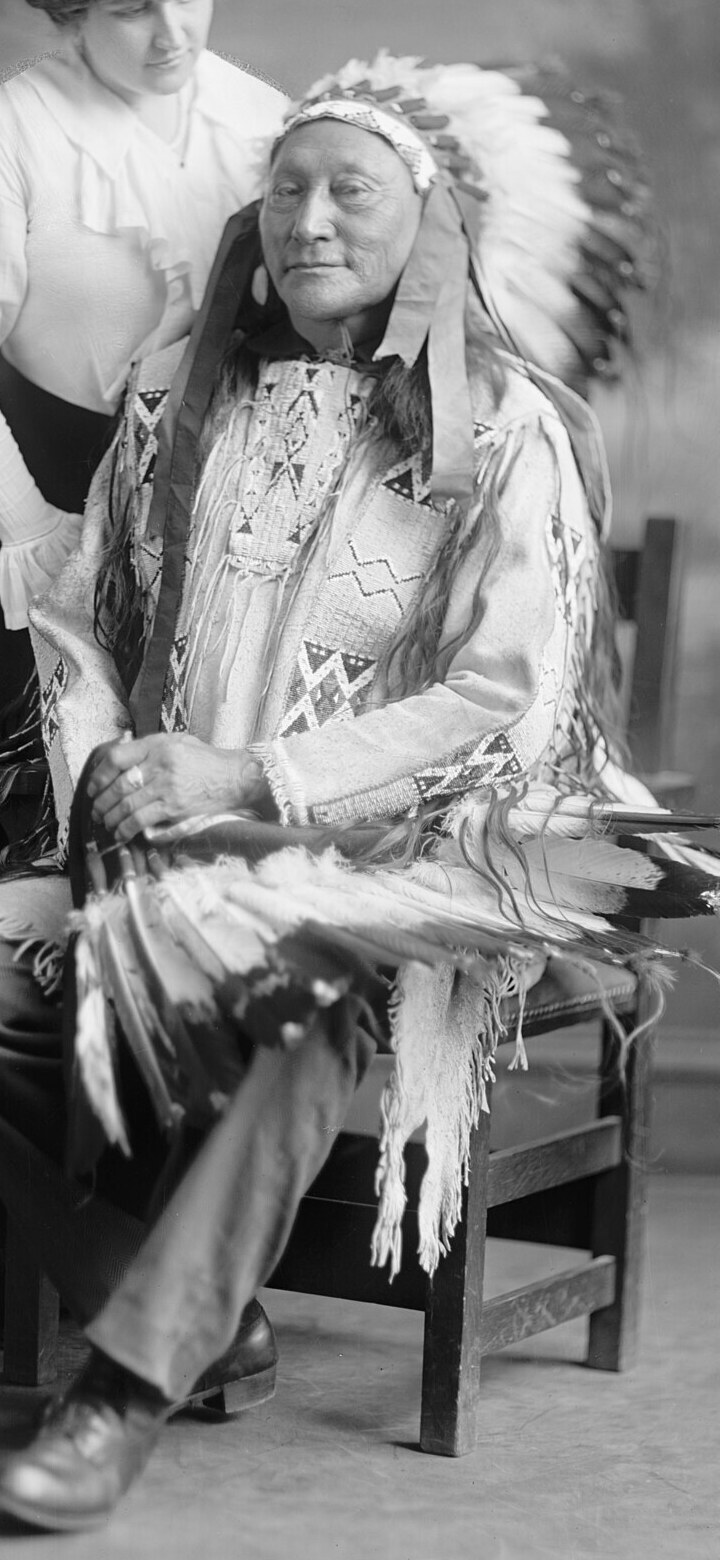
After the wars, Hollow Horn Bear settled at the Rosebud Agency and was appointed captain of the reservation's Indian police — a position of trust on both sides of a difficult line. On August 5, 1881, the Sicangu head chief Spotted Tail was shot dead on the agency road by Crow Dog, a former police captain himself. The killing shook the whole reservation. It fell to Hollow Horn Bear to make the arrest. At the trial in Deadwood he testified plainly, and his words survive in the court record: "Mr. Lelar gave me a paper for the arrest of Crow Dog. Found defendant on a hill between White River and Rosebud Creek, where I made the arrest." Under Lakota law, the matter had already been settled the old way: the families met, and Crow Dog's people paid restitution — $600, eight horses, and a blanket — so that no more blood would follow. But the territorial court tried Crow Dog for murder and sentenced him to hang. His appeal went all the way to the United States Supreme Court. In Ex parte Crow Dog (1883), the Supreme Court ruled that the United States had no jurisdiction over a crime between Indians on Indian land — that within their own nation, the Lakota's own law governed. Crow Dog went free. The decision is still a foundation stone of tribal sovereignty law, taught in every federal Indian law course. (Congress answered it two years later with the Major Crimes Act, extending federal jurisdiction — the tug-of-war over sovereignty that began on that hill between the White River and Rosebud Creek continues to this day.) Hollow Horn Bear served as police captain until illness forced him to resign about five years later. From then on his weapon was oratory: in 1889 he was the Sicangu's chief negotiator opposite General George Crook over the breakup of the Great Sioux Reservation, arguing to keep the Black Hills at any cost, and he carried his people's case to Washington again and again for the rest of his life. ——— CREDITS & SOURCES About: Chief Hollow Horn Bear (Matȟó Héȟloǧeča), Sicangu Lakota, 1850–1913. Compiled account; his quoted testimony is from the 1883 trial record in the matter of Crow Dog (public domain). Sources: Sidney L. Harring, "Crow Dog's Case," American Indian Law Review 14 (1989); Ex parte Crow Dog, 109 U.S. 556 (1883); "Hollow Horn Bear," American National Biography (2000), by Duane Hollow Horn Bear; Wikipedia (with full citations). Photo: Hollow Horn Bear, Bain News Service, 1913, Library of Congress (public domain). Shared in honor of Chief Hollow Horn Bear and his descendants.