Across the Big Water — Standing Bear with Buffalo Bill in London
IHHB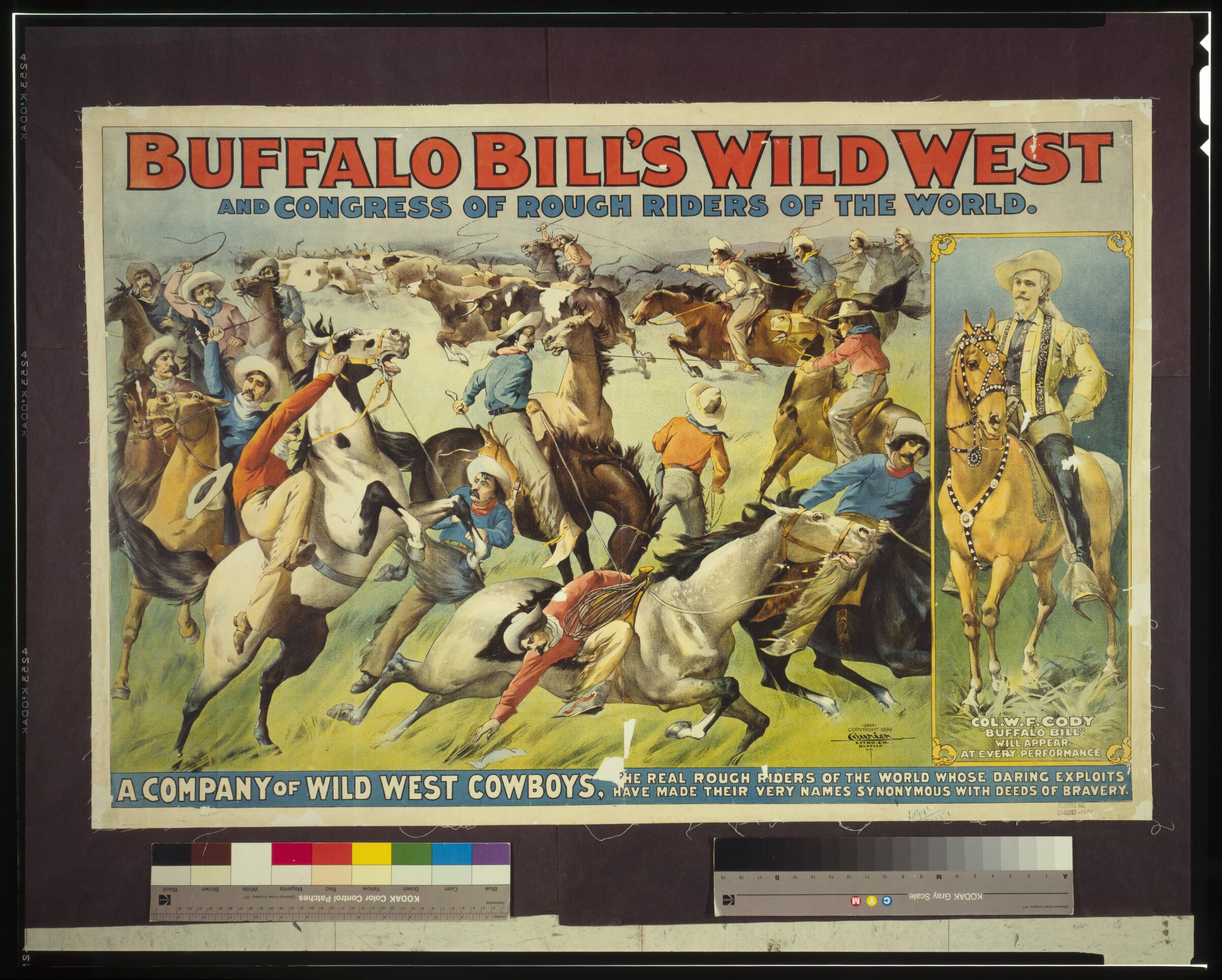
In 1902 Luther Standing Bear was hired to lead the seventy-five Lakota performers traveling with Buffalo Bill's Wild West show to England. In "My People the Sioux" he remembered the journey — the first time most of the group had ever left the plains, let alone crossed an ocean. These are his words, lightly condensed: "My wife was greatly pleased when I told her the news that we were going to have the chance to go abroad. We had only three days to get ready. We were to meet the entire Indian delegation at Rushville. When we reached the top of the hill looking into Rushville, there lay a full Indian camp spread out before us, with all the tipis arranged in a circle. "As this was my first experience in the show business, I did not know just how much responsibility was really on my shoulders. There were seventy-five Sioux for me to look after, many of them a great deal older than myself. After supper one night in New York, a meeting of all the Indians was called, and I arose and said: 'My relations, you all know that I am to take care of you while going across the big water to another country. I understand that the regulations of the Buffalo Bill show require that no Indian shall be given any liquor. You all know that I do not drink, and I am going to keep you all from it. Don't think that because you may be closely related to me I will shield you, for I will not.' "The ship was soon under way, and as we got out on the ocean, the water became very rough. The women and children became greatly frightened, and even some of the men began to wish for Pine Ridge Reservation. I include myself among the latter. For nine days I suffered the tortures of the damned. It was only Indian corn and dried meat that kept me up. Some of the Indians did not get sick at all, but ate their meals regularly and laughed at the rest of us. "We landed at Liverpool on a very drizzly morning, and were put in some very funny-looking cars with doors on each side. As many of the boys had their faces painted and wore feathers in their hair, every time the train stopped and the Indians stuck their heads out the windows, this sight must have appeared funny to onlookers. "Finally we reached a large city called London. The meat served to us was cut into small pieces and served with potatoes and greens. We cared nothing for the greens — all we wanted was meat, and plenty of it. So we would take the meat off the platter and hand the platter back to the waiter with the potatoes and other things still on it. We certainly kept those waiters busy. "The next morning, in came a very finely dressed man, wearing a high silk hat, Prince Albert coat, kid gloves, silk handkerchief in his pocket, and carrying a cane. He was so dignified-looking that all the Indians wondered who he might be. I concluded he must be either a fire inspector or the proprietor of the place. After finishing breakfast and returning to our room, what was our amazement to find our late dignified caller — minus all his finery — making up our beds. "The place where we were quartered I had supposed to be a large hotel. In reality, it was the Olympia Theater, the largest at that time in England. We remained at the Olympia three months and had a royal good time. The English people were very good to us. They would invite the Indians to their homes and give them plenty of good things to eat. One lady in particular always came twice a week, carrying a pocketbook made of wire — in it she always carried gold pieces. She would take out men or women — sometimes an entire family — and treat them until her pocketbook was empty. "I recall that one day I visited the house where all the toys were kept with which Queen Victoria had played as a child. I also visited Westminster Abbey, one of the most beautiful churches in the world, and a very historic spot. So I, for one, was sorry when the show came to an end in London, and we had to leave the beautiful Olympia Theater." ——— CREDITS & SOURCE Written and told by: Chief Luther Standing Bear (Óta Kté / "Plenty Kill"), Sicangu and Oglala Lakota (1868–1939), leader of the Lakota delegation on the 1902–03 tour. From: "My People the Sioux" (Boston: Houghton Mifflin, 1928), chapter 19, "With Buffalo Bill in England." Public domain in the United States (published before 1930). Image: "Buffalo Bill's Wild West and Congress of Rough Riders of the World" poster, c. 1899, Library of Congress (public domain, via Wikimedia Commons). Shared here in honor of the teller. If this story belongs to your family or community and you would like it presented differently, please reach out.